FM Unohdetut explores loneliness through dance theatre. The piece invites us to question what loneliness means in a competitive capitalist society, where the human being is viewed as a fully autonomous agent – a collection of personal resources and potentials.
FM Unohdetut examines the fundamental need to be seen and, at the same time, reflects on how the constant, algorithm-assisted pursuit of dopamine affects our social presence. The work brings to the stage a world of light and shadow, where the dancer’s movement intertwines with a tapestry of unusual radio broadcasts.
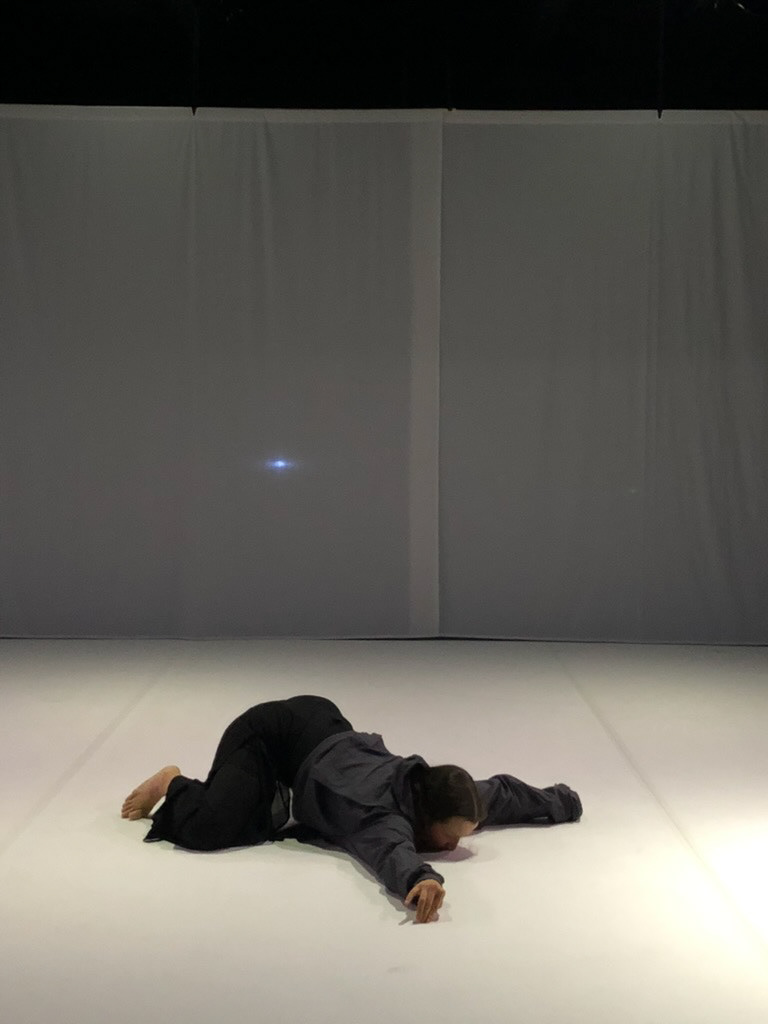
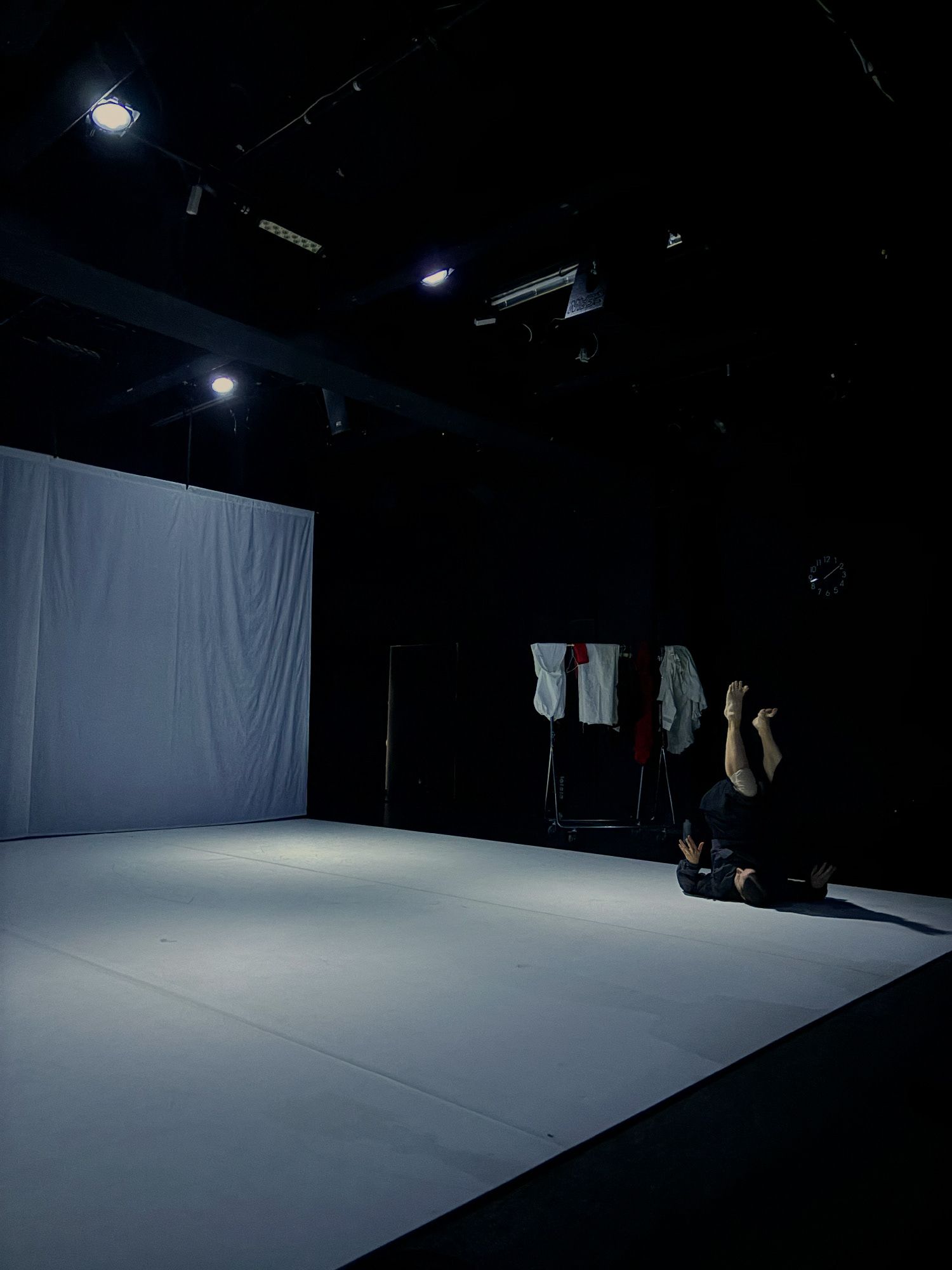
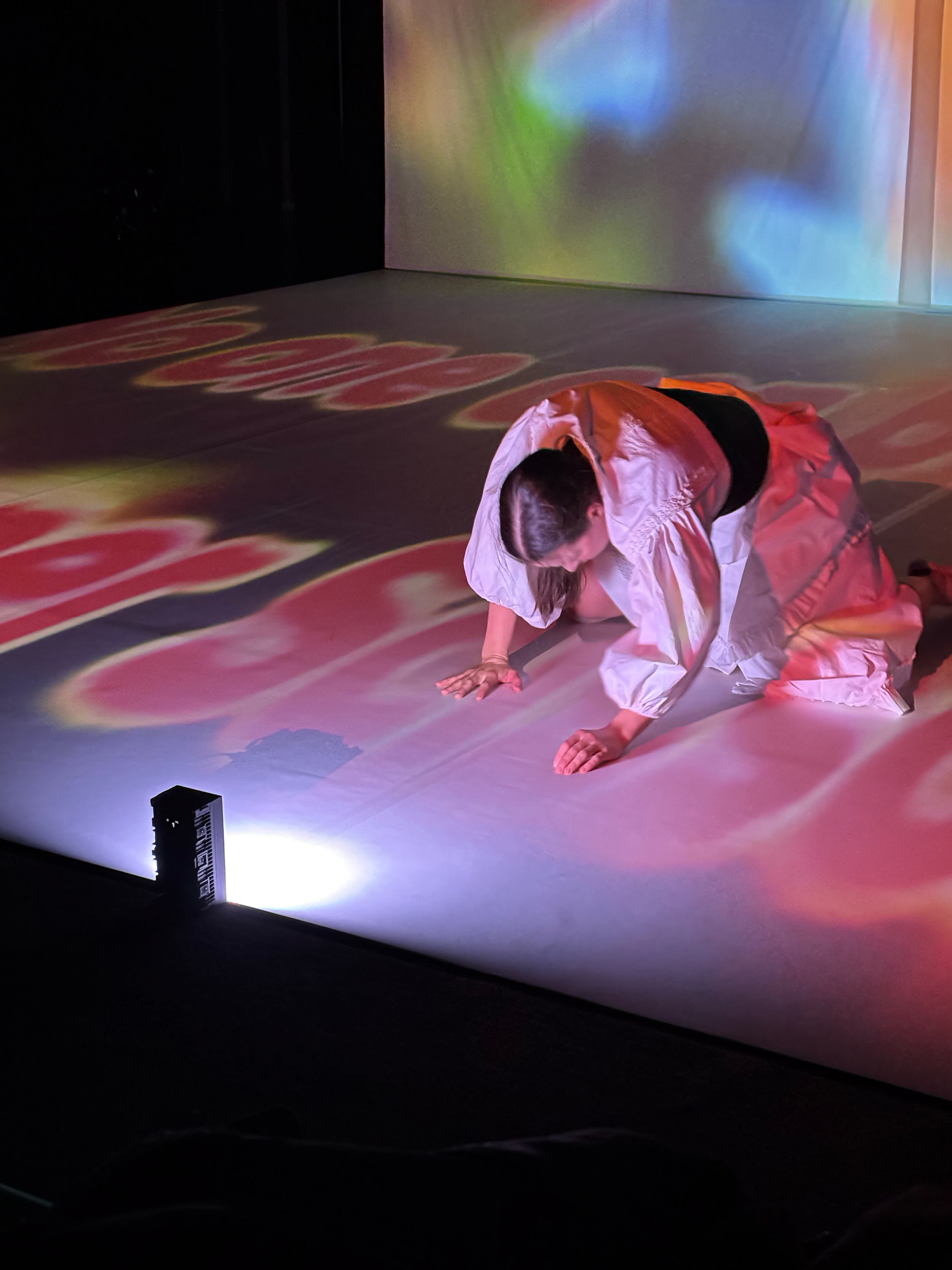
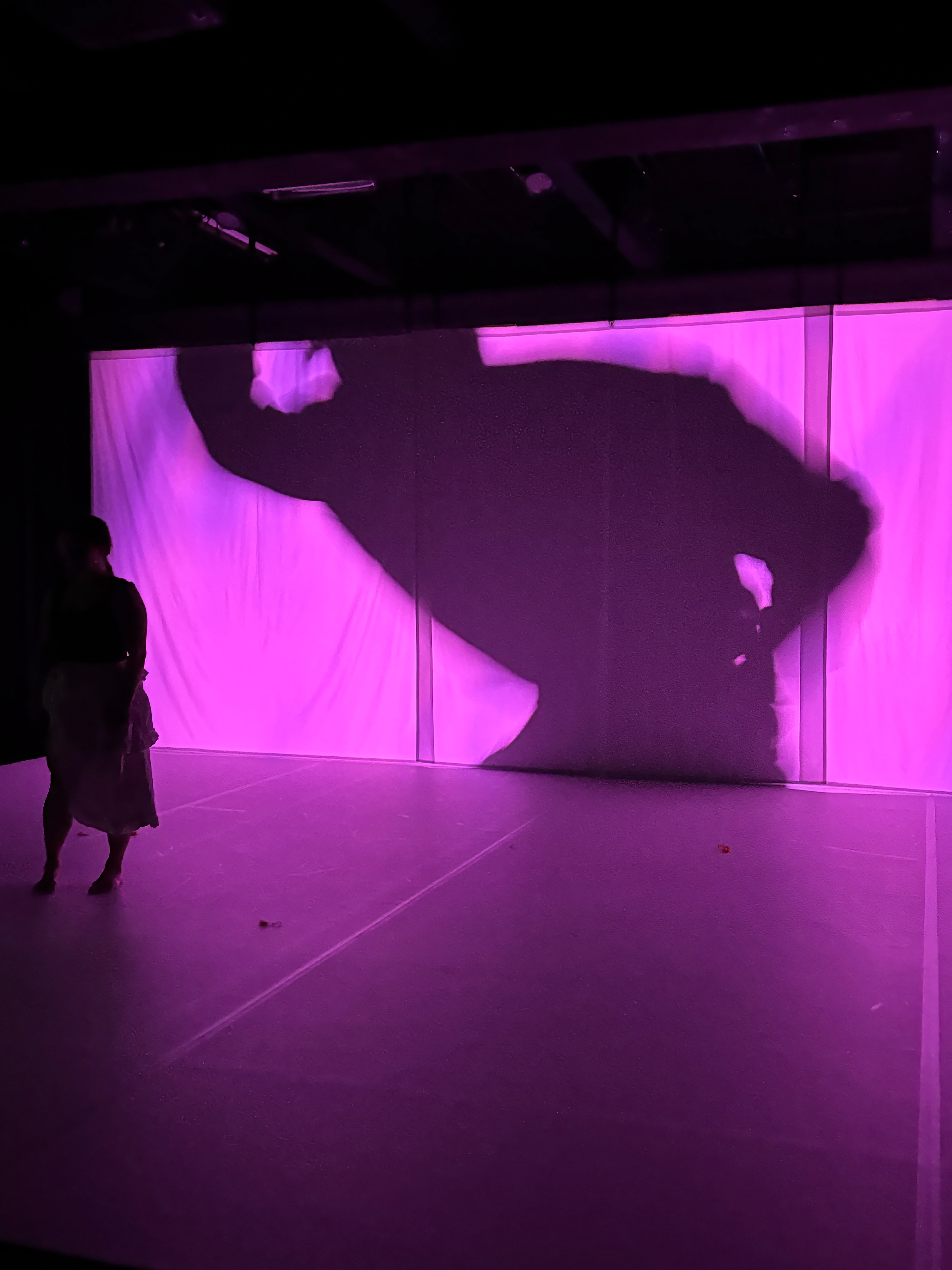
I designed and constructed two costumes and the stage set for the performance, working within a minimal budget and prioritising second-hand materials whenever possible. The set was conceived as a collapsible screen — a permeable surface that could be seen through, receive video projections, and cast shadows, allowing light and movement to become part of the scenography.
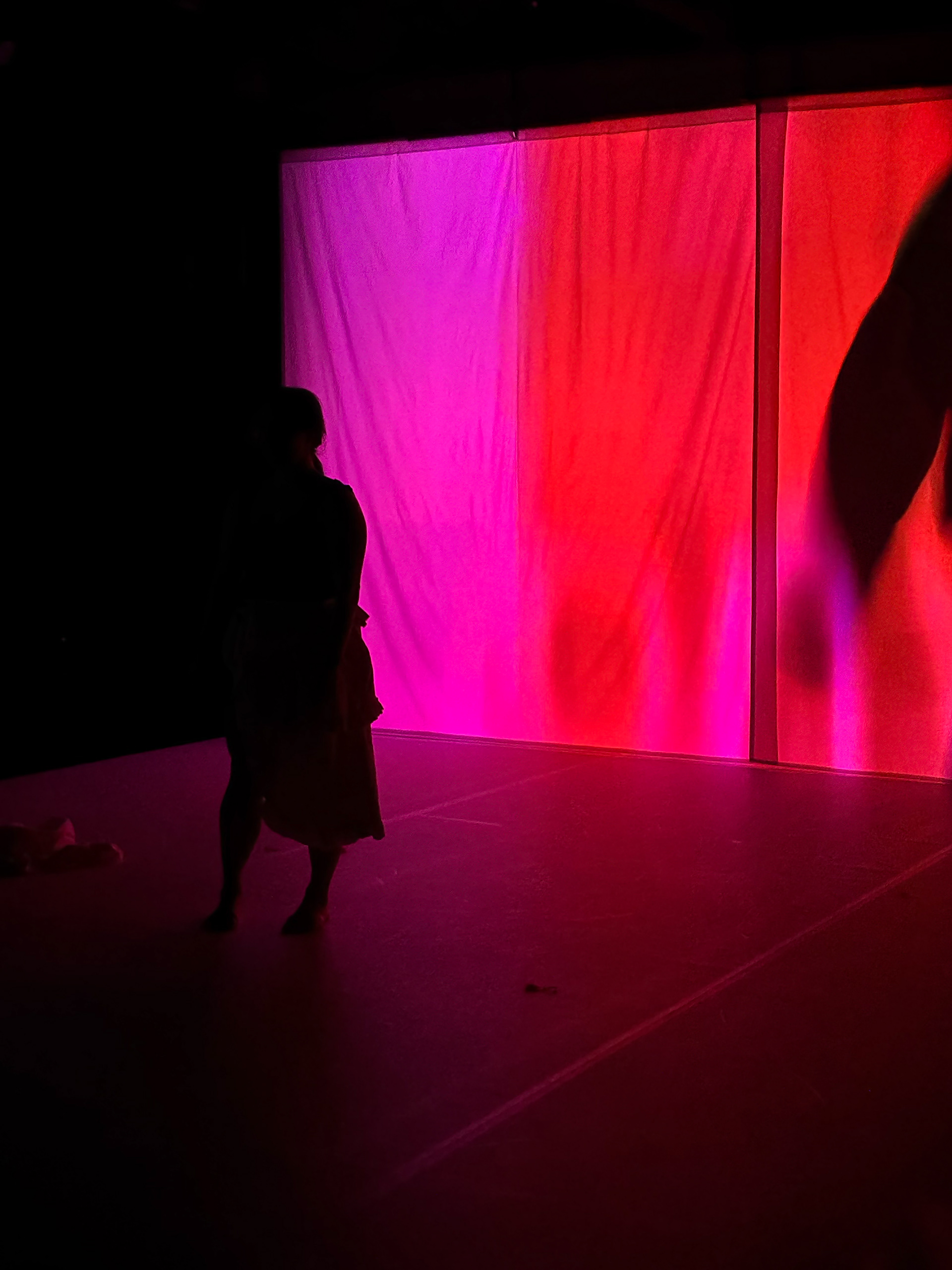
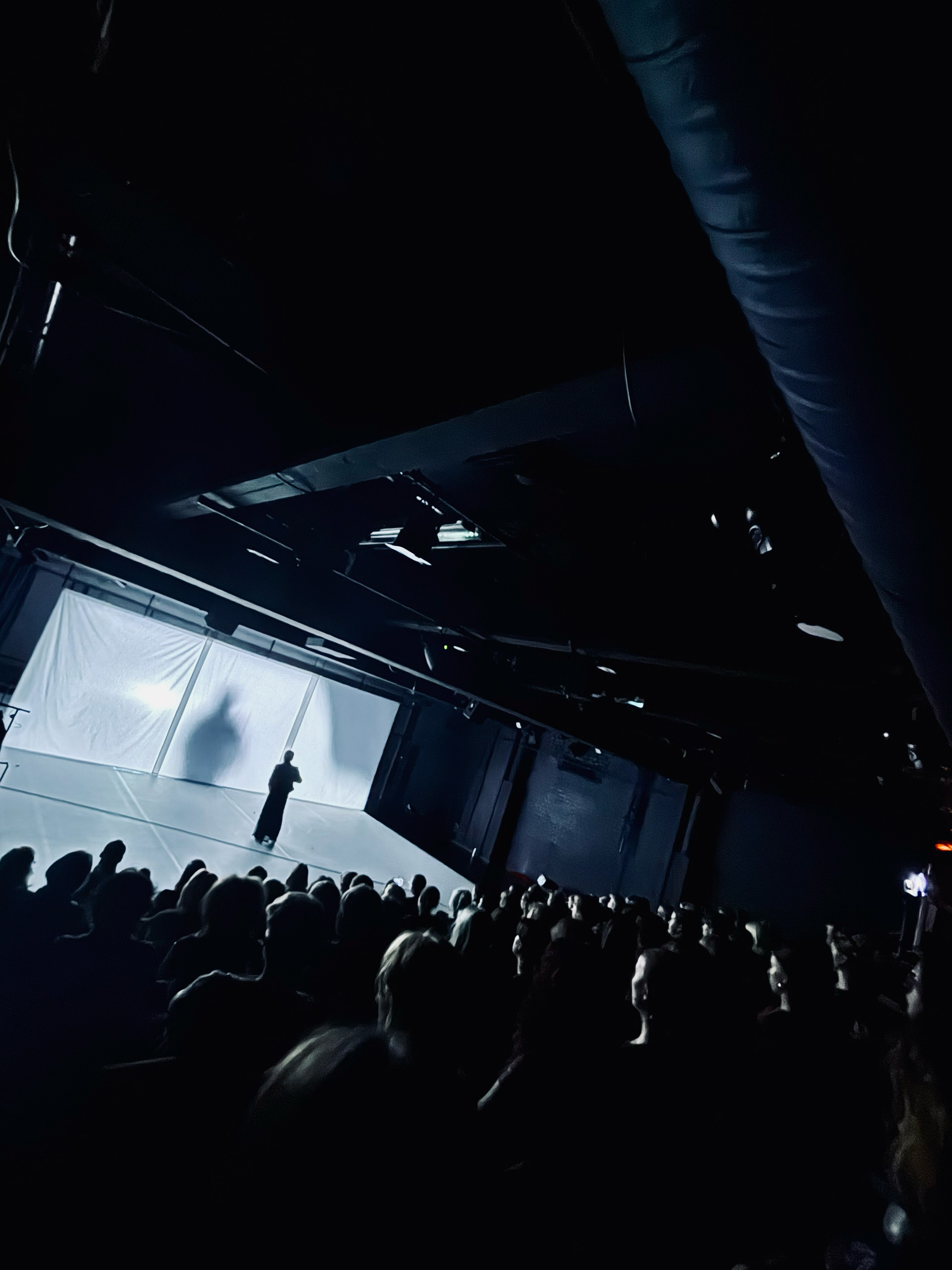
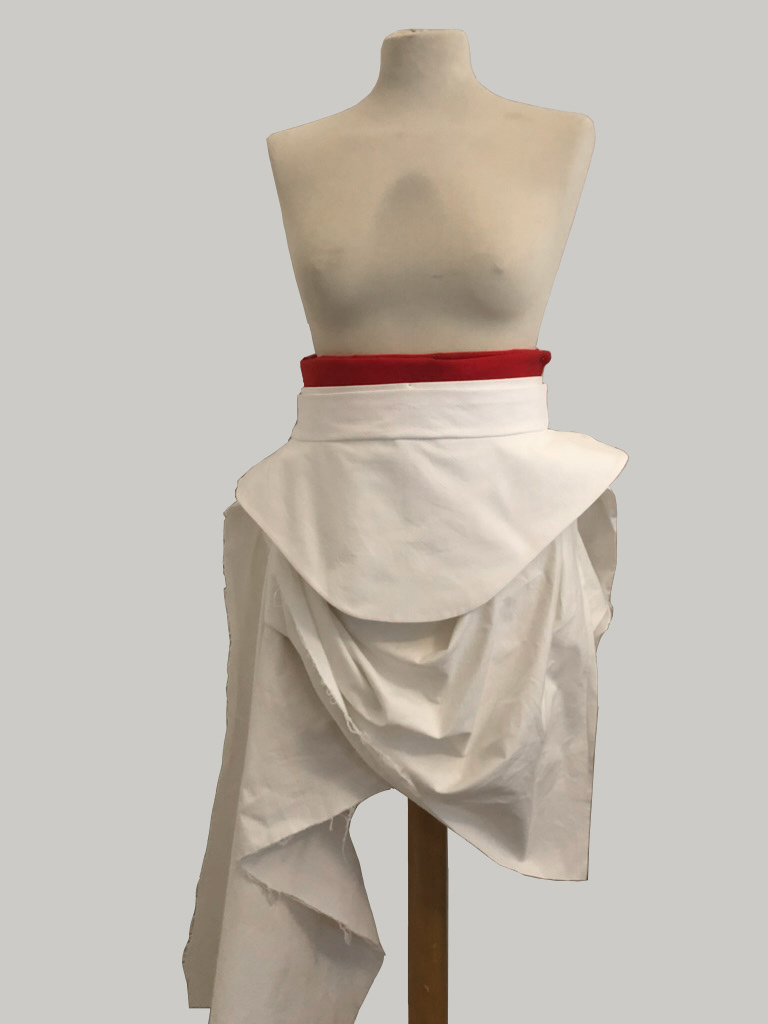
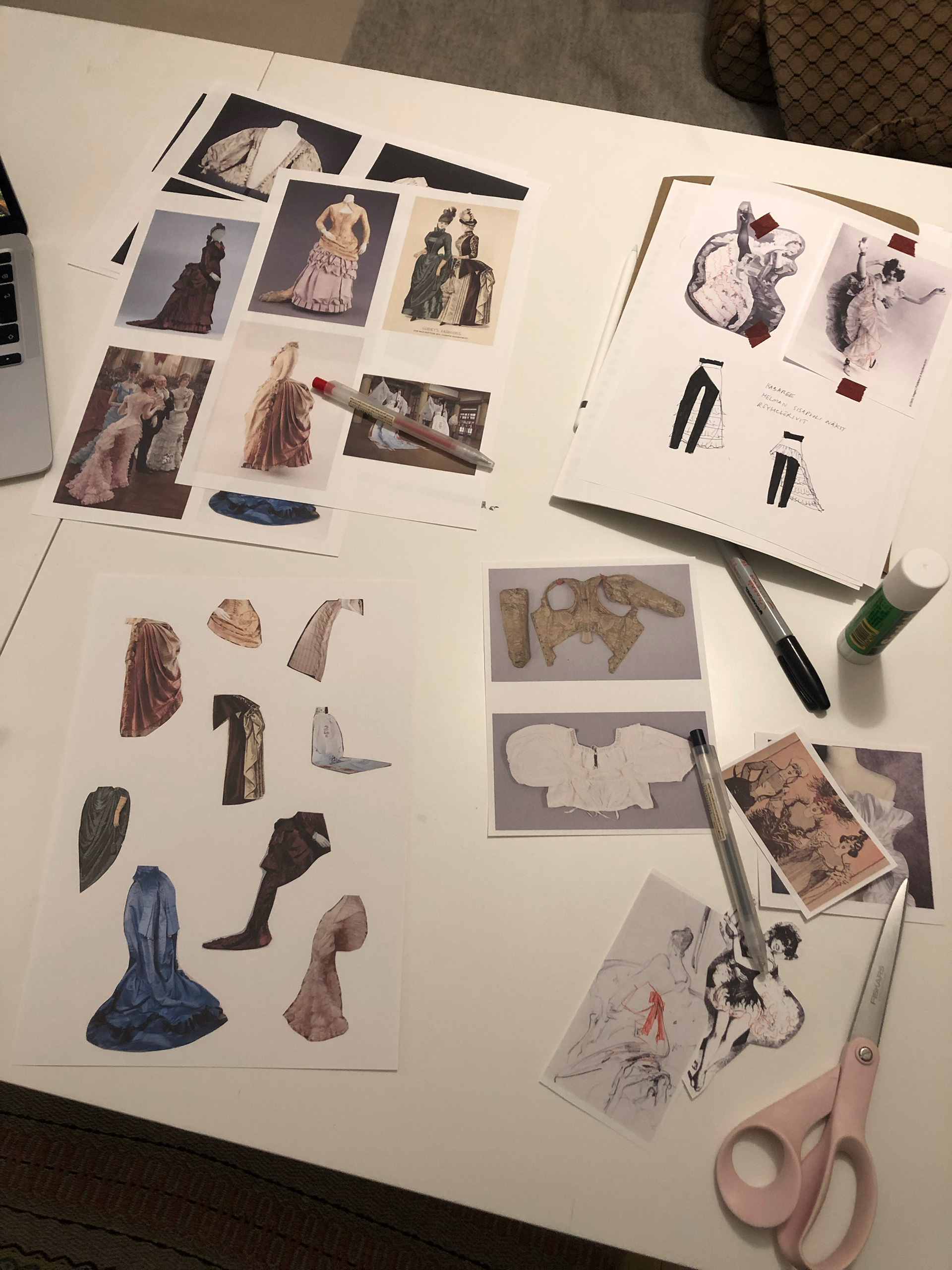
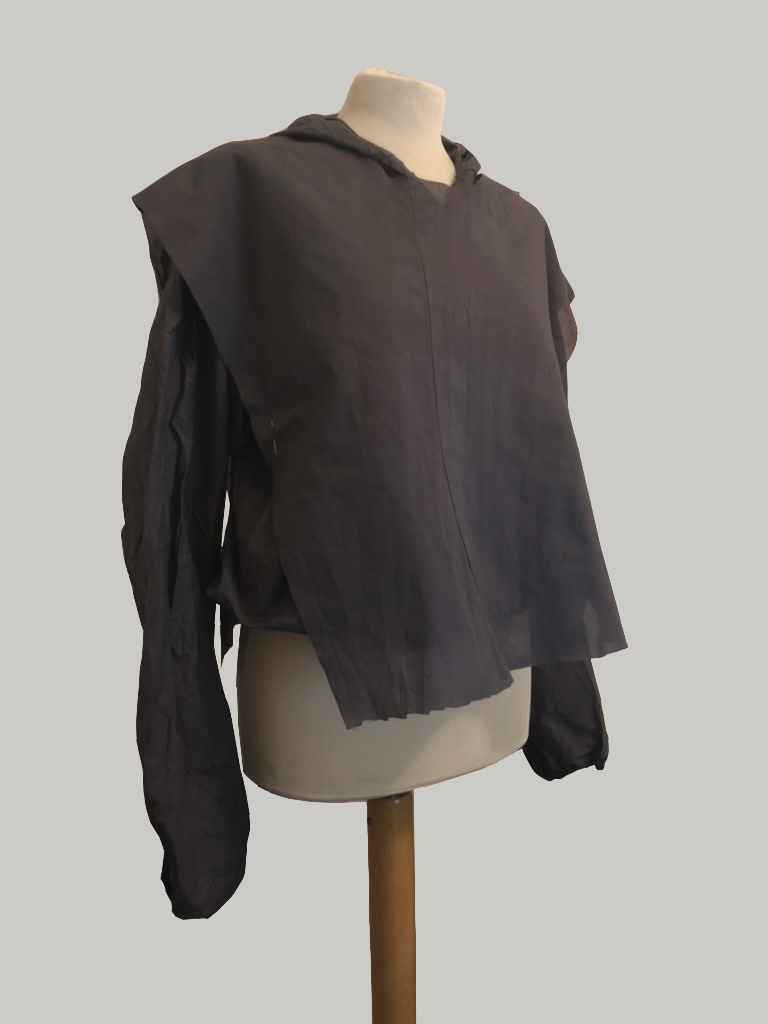
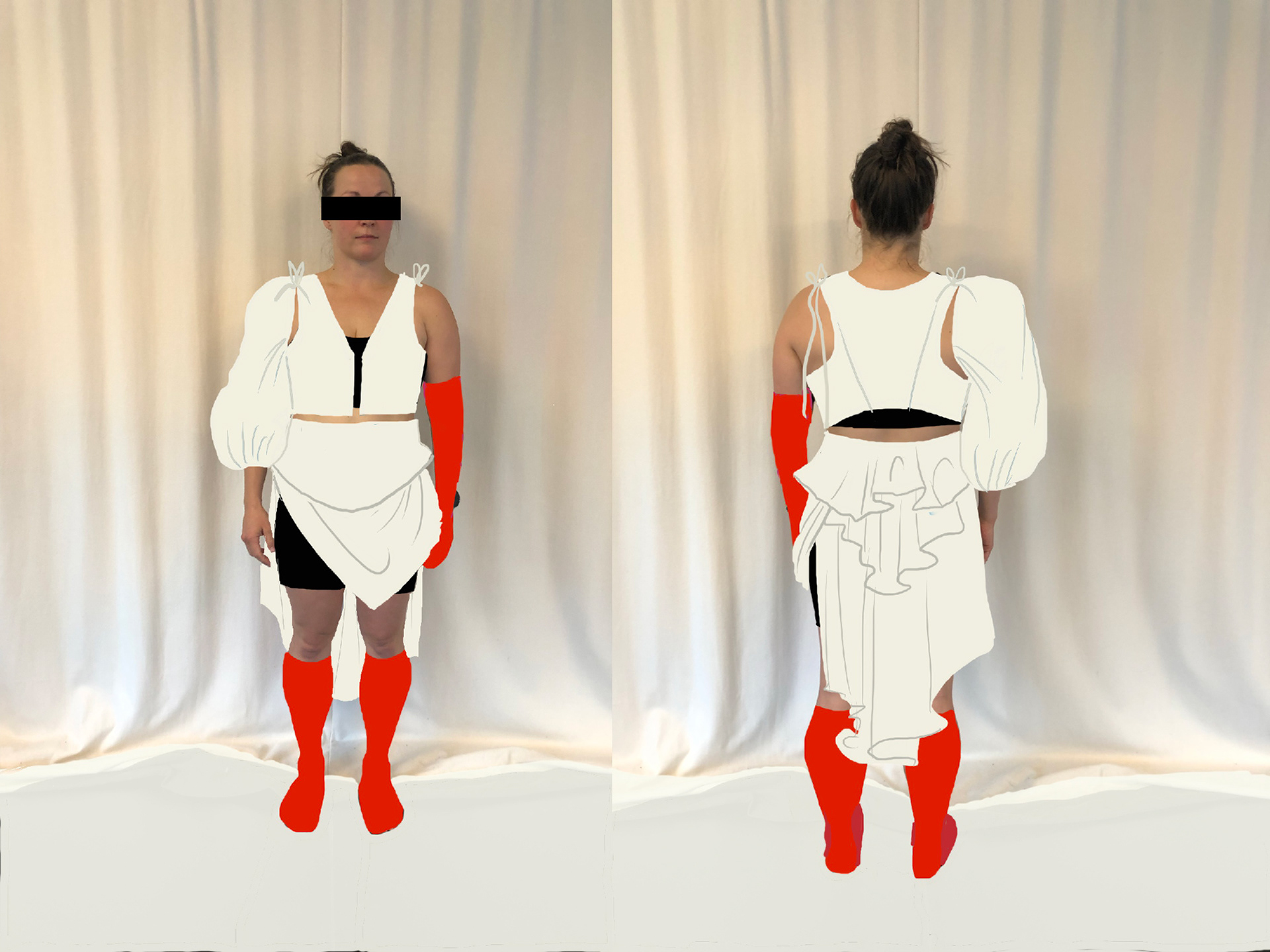
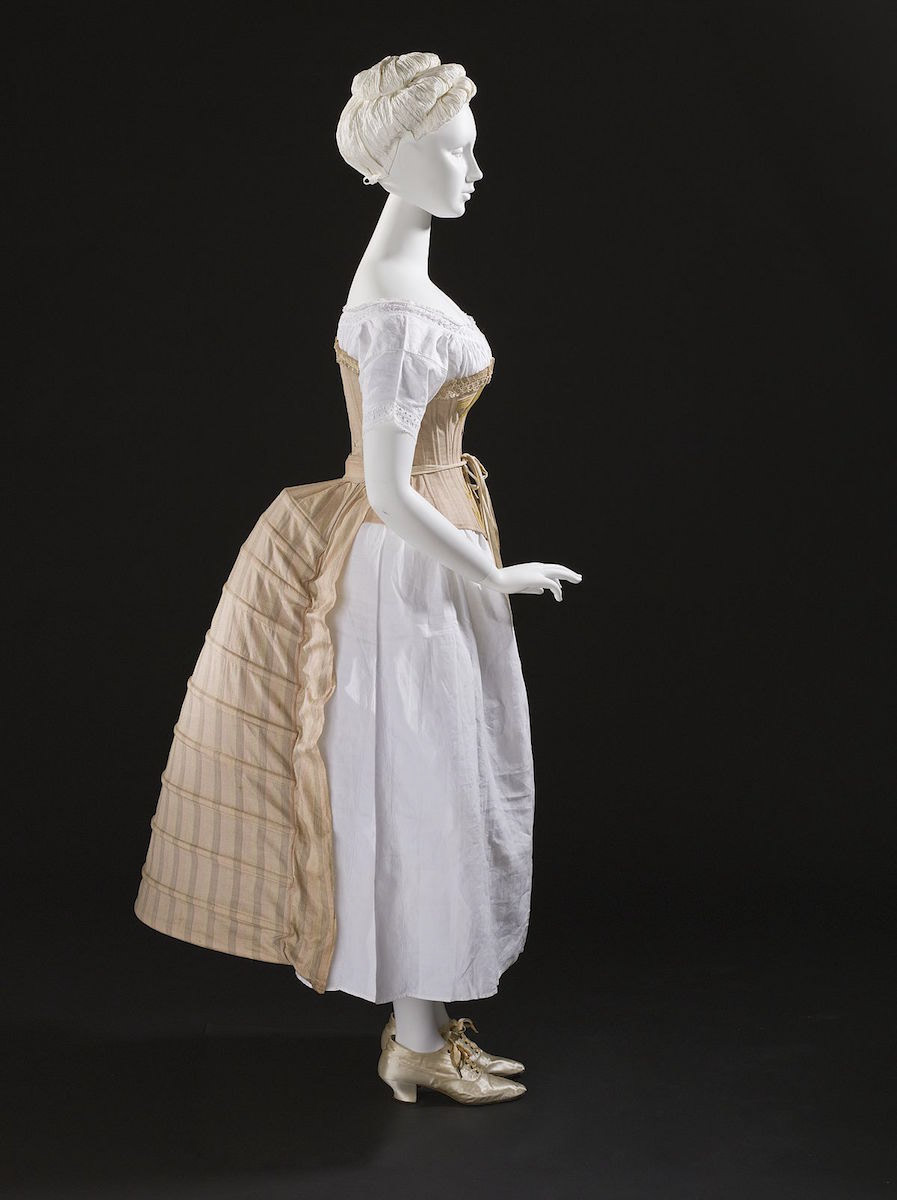
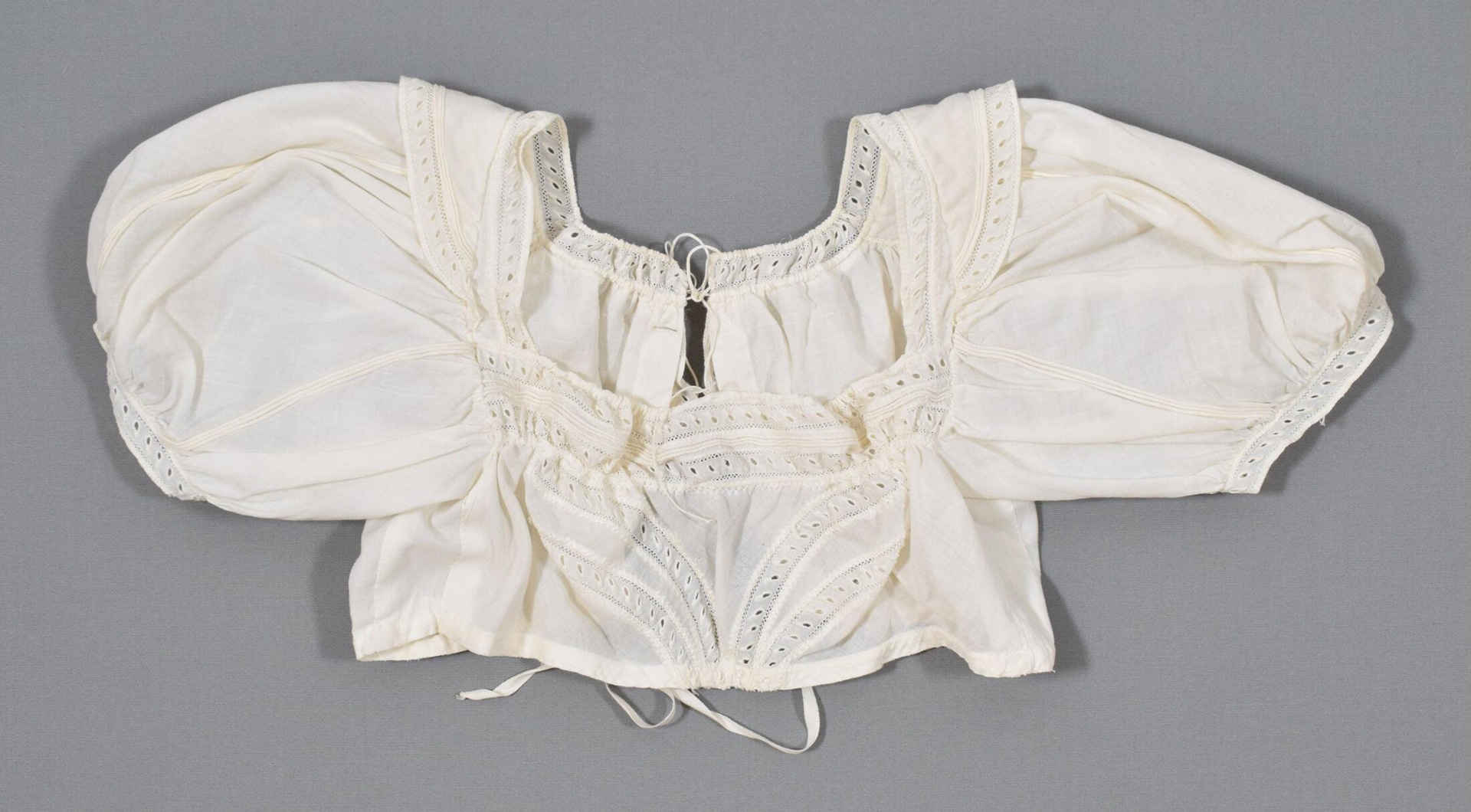
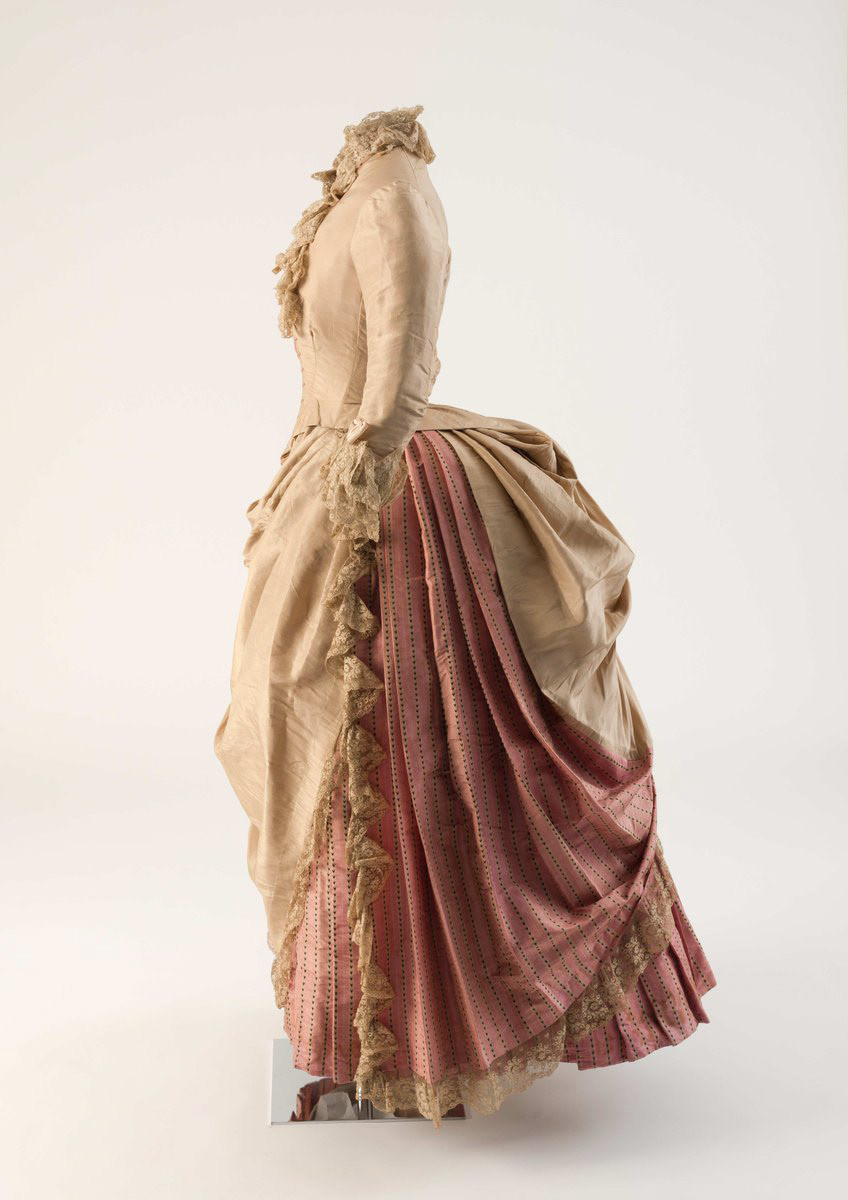
The costumes were developed in dialogue with the characters: one drawing inspiration from 17th–18th century women’s dress, with a bodice, lace details and a bustle-like silhouette that emphasised a fascination with surface and ornament; the other darker and more understated, built from a black hoodie and trousers layered with delicate, translucent fabrics that seemed to dissolve into shadow. Parts of the garments were intentionally left unsewn or loosely constructed so they could float and respond to the dancer's movement. The entire process was material-led and adaptive, balancing historical references, atmosphere, and practical stage requirements within clear structural constraints.